Ever felt like you weren’t just watching the story unfold, but living it yourself? Narrative interactivity puts you right in charge, letting you decide what happens next like you’re flipping through your favorite choose-your-own-adventure book.
It’s like stepping into a live show where every twist and turn adds buzz to the moment. By mixing clever storytelling with hands-on play, you feel every emotion and make real, personal connections with each change.
Stick around and see how this approach turns everyday moments into lively, unforgettable adventures.
Understanding Narrative Interactivity Techniques

Imagine being part of a story where you're not just a bystander, you control the twists and turns as the plot unfolds. Narrative interactivity lets you dive right into the action, choosing what happens next much like flipping through your own choose-your-own-adventure book. Every decision you make nudges the story down a new path, keeping you on your toes and making each experience unique.
These techniques spark magic in various formats, from video games to interactive films and even virtual reality adventures. In a video game, for instance, every move you make can send the story in a totally different direction, creating a dynamic, heart-pounding feeling of control. And in interactive films, you might pick which dialogue to follow, crafting a story that feels personal and alive.
This creative approach turns watching into doing, transforming a simple sit-back-and-watch moment into an engaging, hands-on experience. Whether you're feeling the buzz of a live performance or stepping into a vividly imagined digital universe, narrative interactivity makes every moment count.
Branching Story Design in Interactive Narratives
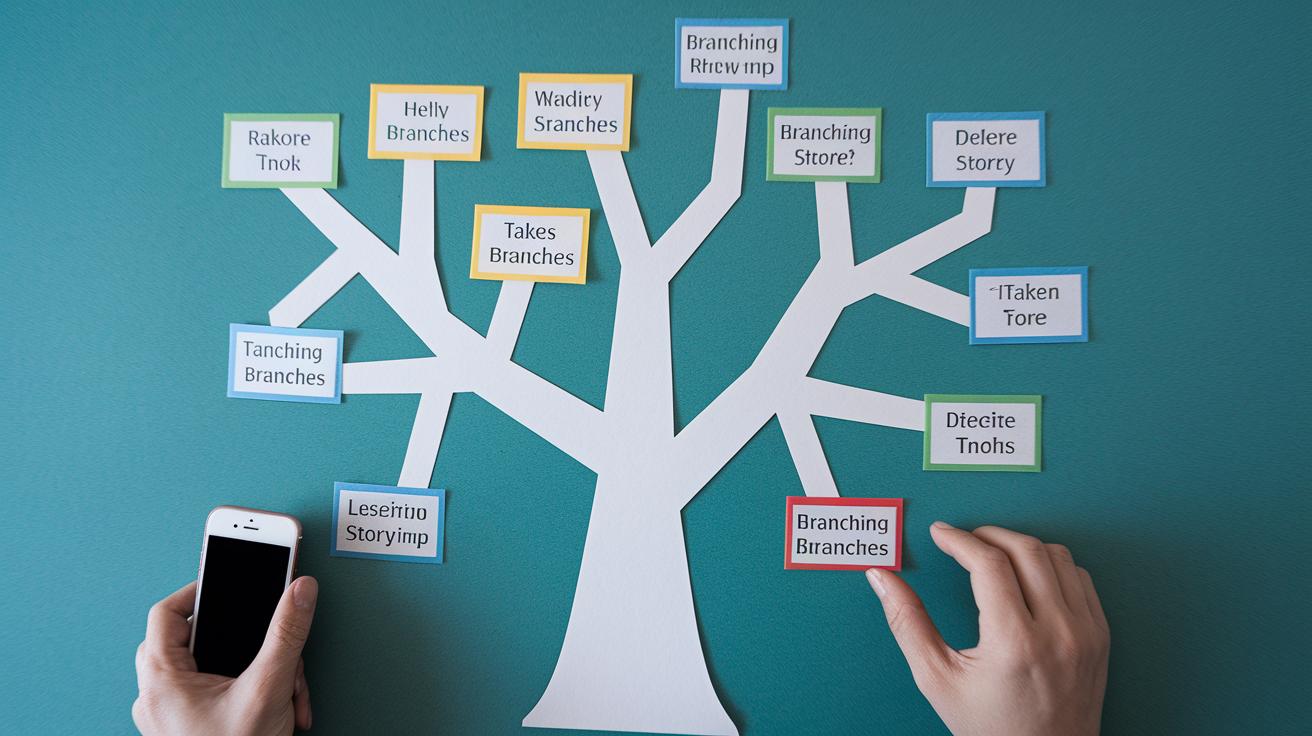
Branching story design opens up a world where every choice you make sends the narrative down a new, unexpected path. Instead of following one straight line, the story splits into different nodes. Picture it like a decision tree: one simple pick, such as "take left," can launch you into a whole new set of surprises and challenges. It’s a way to make the experience fresh every time, inviting you to come back and explore all the turns.
Designers love to play with different setups for these branching stories. Some opt for a neat, linear tree that keeps the plot easy to follow, while others dive into complex pathways that feel like stepping into a parallel universe. There’s a model to match every mood and style, making the journey as varied as it is exciting.
| Story Branch Model |
|---|
| linear tree |
| web network |
| nested loops |
| panel structure |
| hub-and-spoke |
When building these interactive narratives, it’s key to balance each node so no single decision steals the spotlight. By keeping every choice meaningful yet fair, the whole experience stays connected and engaging, no matter how many twists the story takes.
Player Choice Mechanics and Dynamic Plot Navigation

Player choice mechanics give you the power to steer the story. When you decide what comes next, you're really shaping how the plot unfolds.
You might encounter options like dialogue trees (simple chat screens where you pick your response), timed challenges, tough moral choices, or triggers based on the resources you have. For example, a dialogue tree might say, "Pick honesty: share your truth and change your journey." And those timed challenges keep you on your toes as you race against the clock.
Dynamic plot navigation feels a bit like following a live-updating map. Every decision you make changes the route, just like taking an unexpected road during a trip. This constant shift pulls you right into the action.
Behind the scenes, tools like rule engines and state machines make it all happen. The rule engines check if your choices meet certain conditions, while state machines keep track of where the story is at any given moment. Together, they ensure that every move you make transforms the story instantly.
Case Studies of Narrative Interactivity Techniques in Games and Films

Narrative interactivity techniques let you be in charge of the story’s twists and turns. They turn a simple game or film into a unique journey where your choices bring everything to life. In this section, we explore real examples from well-known video games and an innovative interactive film.
Video Game Case Study: The Last of Us & Red Dead Redemption 2
In The Last of Us, your decisions impact the story through smart companion AI and missions that split into different paths. Imagine a scene where your choice helps a character escape danger, it feels personal and real. Meanwhile, Red Dead Redemption 2 takes it further with honor systems and hidden side quests. Picture weighing moral choices and watching as even small decisions change how characters see you. These games make every playthrough special by adapting the plot based on your actions.
Interactive Film Case Study: Bandersnatch
Bandersnatch shatters the usual film rules by offering clear choices that lead to five totally different endings. Think about picking a door and suddenly being swept into a brand-new story. Every decision you make builds a fresh narrative, inviting you to wonder about the ripple effects of your actions.
Both games and interactive films spark deep engagement by letting you shape the story in real time. Games often weave rich layers through character interactions and side quests, while films like Bandersnatch rely on simple, clear-cut choices to drive the story forward. Ultimately, they both create experiences that feel interactive, intense, and entirely your own.
Best Practices for Adaptive Plot Construction in Interactive Narratives

Adaptive plot construction starts with some solid guiding ideas that shape every creative call you make. Begin by crafting a flexible storyline blueprint loaded with clear decision points and multiple outcomes. Imagine it like piecing together a puzzle where every scene snaps neatly into the next. And along the way, built-in feedback loops make sure every choice feels real and meaningful to the player.
Next, think about building your narrative with a modular design. This cool method lets you swap scene segments around to create surprising new sequences while still keeping the overall story vibe intact. It’s a bit like building a neat structure where each part supports the next, ensuring smooth transitions even when the story branches get busy.
Finally, never skip out on routine playtesting. Regular sessions show you which parts hit home and let you fine-tune your flexible blueprint based on real user feedback. Analytics on player choices give you hints on how to tweak the narrative, making sure it stays lively, balanced, and never overcomplicated.
Final Words
In the action, interactive narratives took center stage, blending digital media storytelling with decision tree exploration and branching story design. The blog walked us through player choice mechanics, dynamic plot navigation, and case studies that bring narrative interactivity techniques to life.
Each section painted a clear picture of how creators craft digital experiences that let you steer the story.
This approach makes entertainment truly engaging, reminding us that every choice adds a spark to a shared digital experience. Keep exploring, and let your decisions light the way forward.
FAQ
What is an interactive narrative or interactive storytelling technique?
The interactive narrative involves storytelling methods that let audiences shape the plot through choices. This technique transforms a linear story into a responsive experience found in games, films, and digital content.
What are some examples of narrative interactivity techniques, including those for kids?
The interactive techniques include branching plots, decision trees, and choice-based narratives. These examples range from video games to kid-friendly interactive storytelling that uses simple visuals to guide young audiences.
What do narrative interactivity techniques PPT presentations cover?
The narrative interactivity PPT presentations typically outline key methods like branching design, decision pathways, and dynamic plot navigation with visual examples that help creators grasp the structure of interactive storytelling.
What are interactive narrative games?
The interactive narrative games mix choice-driven gameplay with rich storytelling, allowing players to make decisions that alter character paths, settings, and outcomes, resulting in engaging and replayable experiences.
How does interactive storytelling use AI?
The interactive storytelling AI adjusts story elements based on real-time player choices by using smart systems. This makes the narrative feel dynamic and personalized, keeping users deeply involved.
What is Twine and how are interactive texts used in narrative design?
The tool Twine is a free software that helps create interactive texts. It enables writers to build branching story nodes easily, making it simple to develop engaging, choice-based narratives for web platforms.
What narrative technique is used in interactive television?
The narrative technique of interactive television involves embedding decision points that let viewers choose plot directions. This method creates a more immersive viewing experience by directly involving the audience in the story.