
Ever wonder if a steady flow of friendly emails could turn your business around? Imagine each email as a small nudge that takes someone from a passing glance to a real, warm connection with your brand.
Think of a nurture campaign like a gentle guide that turns casual visits into lasting relationships and boosts your sales. In this post, we’re going to show you how well-planned email campaigns spark growth and keep people excited. It’s like transforming a little bit of curiosity into true loyalty, one message at a time.
What is a nurture campaign and why it matters

A nurture campaign is a smart way to build true connections with future customers. It uses personal emails and messages to guide people step by step through your marketing process, making them feel right at home with your brand from the very beginning.
At its heart, this campaign helps potential customers discover what you offer slowly and steadily. Each message is designed to give just the right amount of info, matching the unique journey every person takes. It turns casual interest into real excitement, keeping things friendly and engaging along the way.
- It creates about 50% more leads that are ready to buy, and it costs around 33% less.
- Leads that are nurtured tend to make bigger purchases, with order values about 47% higher.
- Response rates can be 4 to 10 times greater than those from regular email blasts.
- Plus, it fixes the issue where nearly 80% of new leads never turn into customers without a proper follow-up.
Brands really need to use nurture campaigns. When you send thoughtful, targeted messages throughout the customer’s journey, you not only share what your products can do but also build a lasting bond. By planning your campaign with clear steps and smart follow-ups, your marketing becomes more efficient and powerful. This connection makes the transition from first interest to making a purchase feel natural, boosting both sales and loyalty in the long run.
Core components of an effective nurture campaign

To kick off a great nurture campaign, start by truly getting to know your buyers. Create clear buyer profiles and sort your leads into groups so you can see who’s who. When you map out a customer’s journey, each message you send will hit home by matching what they care about and the issues they face. For example, if someone visits your site again, you can send them updates that are just right for them, making each interaction feel friendly and personal.
Next, make sure your content lines up with where your customer is in their journey. Set up an email series that lands right on time, whether it’s weekly or every other week, to keep everyone hooked without overloading them. Adding dynamic bits that change based on who’s reading makes every email feel like it was made just for them. This smooth flow helps build excitement until they’re ready to take the next step.
Finally, keep an eye on how things are going by checking open rates, clicks, and conversions. This info lets you adjust your strategy as your audience changes, ensuring every message stays fresh and relevant. By mixing smart grouping, well-timed messages, and regular check-ins, you build a nurture campaign that drives real growth and keeps your audience connected.
Selecting the right automation tools for your nurture campaign

A smart automation tool makes running your nurture campaign feel like enjoying that perfect encore at your favorite live show. It quietly handles everything behind the scenes, sorting your leads into easy groups and launching personalized email journeys for you. Think of it like a domino effect: when someone grabs your guide or checks out your webinar, the tool instantly sends the right message without you having to do a thing.
When you’re shopping for an automation tool, look for features like clear segmentation, messages that trigger based on actions, and support across different channels. Imagine it as your own backstage manager, ready to cue up emails when someone visits your site or downloads content. With a tool that combines email, landing pages, and real-time stats, you can watch open rates, clicks, and conversions all live, like tweaking stage lights to set the perfect mood.
So, when choosing a tool, pick one with a friendly dashboard and flexible rules that adjust as you need. Try out a few options and ask, "Will this tool automatically tailor messages based on what my leads do?" For example, one tool bumped a company’s conversion rate by 20% just by automating follow-ups. Choose the tool that grows with your campaign and keeps your audience tuned in every step of the way.
Step-by-step guide to designing your nurture campaign workflow
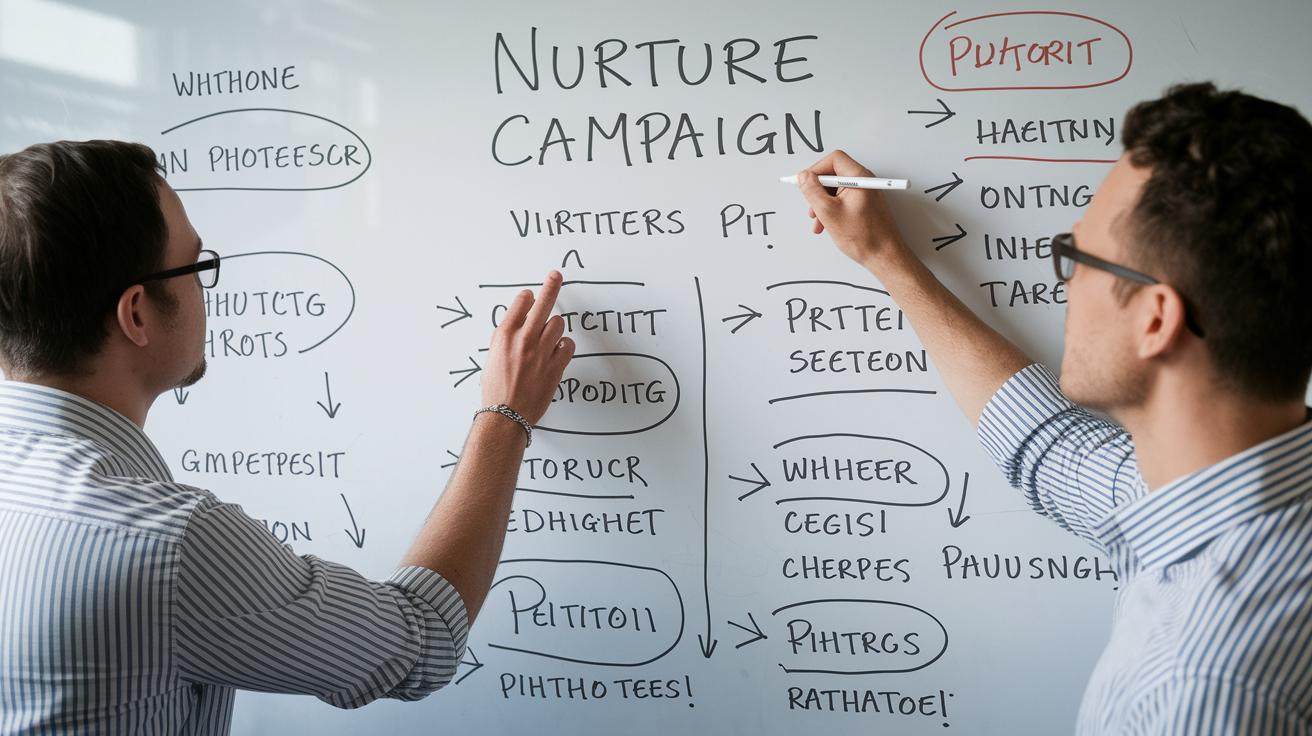
Define objectives and audience segments
Start by picking clear goals for your campaign. Whether you want to boost your brand, turn curious visitors into potential buyers, or encourage extra purchases, set a specific target and get to know your audience well. Think of it like choosing the perfect playlist for a party, you pick the mood and know exactly who’s invited. For example, you might focus on changing browsers into loyal customers by sending emails that really speak to their interests. This clear focus helps you sort your audience into groups and lays down the foundation for a campaign that truly connects.
Map buyer journey touchpoints
Next, draw out your customer’s journey by spotting key moments like website visits, downloads, or requests for a demo. Each of these moments is a chance to make a real connection and deliver timely, useful info. Imagine planning a road trip and marking all the cool stops along the way, each stop marks a little milestone on the adventure. One idea could be: after someone downloads a guide, the next email might share a related success story to build on that first spark of interest. This simple map keeps your messages on track and makes sure your content hits the mark at just the right time.
Develop content sequence
Now, put together a series of emails and messages that flow naturally as your audience moves through your funnel. Mix in helpful tips, interesting case studies, easy-to-follow product guides, and occasional special deals at just the right moments. Think of it like a live show where each act builds on the energy of the one before it. For example, you might start with a tutorial email, then follow up with a success story, and later share a useful product tip, each step nudges your audience closer to making a decision.
Configure triggers and automation
Finally, set up smart rules to send out messages automatically based on actions like clicking a link or filling out a form. You can even use lead scoring, which helps move prospects along the funnel as soon as they hit certain engagement markers. It’s like setting your playlist to automatically play the next favorite song when one finishes. For instance, when someone fills out a form, an automated thank-you email could follow up with a special offer to keep the conversation going.
nurture campaign: Spark Growth & Engagement

A/B testing is key to refining your email strategy. Try out various subject lines, sending times, and call-to-action options to see what really clicks. For example, you might test "Don't miss out on exclusive secrets" against "Need a boost today?" to find your winning formula.
Keeping your contact list up to date is just as important. Regularly trim out inactive email addresses and use gentle re-engagement emails like "We miss you, let's catch up!" to reconnect with quiet readers. This way, your messages reach people who are genuinely interested.
Personalization can make a big impact on your open rates. Tailor the email content and sender details so it feels like a personal note just for you. Imagine receiving an email that greets you by name and references something you recently enjoyed, it instantly feels more genuine and trustworthy.
Lastly, make sure your sales and marketing teams are working together. Set up a clear follow-up plan for high-value leads so everyone is on the same page. A quick team meeting after a campaign can ensure that outreach is timely and coordinated, keeping the momentum alive.
Measuring ROI and key metrics for nurture campaigns

Imagine tuning into your favorite beat to catch the rhythm, tracking your nurture campaigns is just like that. You start by keeping an eye on simple indicators like open rates, click-throughs, conversions, and ROI. These numbers show you which parts of your campaign sparkle and which parts might need a little adjustment. It’s like hearing the cheers after a live performance, you know you’re on the right track.
| Metric | Definition | Benchmark |
|---|---|---|
| Open Rate | The percentage of people who open your email | 20-25% |
| Click-through Rate | The percentage of people clicking on a call-to-action | 3-5% |
| Conversion Rate | The percentage of people doing the desired action | 2-5% |
| ROI | The revenue you earn for every dollar spent on your campaign | $38 for every $1 |
Then, dive a little deeper. Look at sales-ready leads, cost per lead, and the lift in average order value from those nurtured segments. Adjust your strategy based on these insights, kind of like fine-tuning an instrument before a live show. This way, every email you send not only reaches your audience but also drives real growth and keeps the energy alive.
Case studies showcasing successful nurture campaign examples

One inspiring instance is a persona-based drip campaign that sparked a 30% jump in converting marketing leads into sales-ready prospects. By crafting messages that felt tailored to common buyer profiles, every email hit home as if it was written just for you. Imagine getting an email that casually starts with, "Hey, we know you love great content, check this out!" That personal touch kept the audience engaged and helped move them from just browsing to seriously considering a purchase.
Another smart strategy focused on abandoned shopping carts with a simple three-email series. This approach reclaimed 12% of lost carts and boosted overall sales by 8%. The emails reached out at just the right moments, gently reminding customers about the products they’d left behind while tossing in exclusive offers. Picture receiving a note that says, "Did you forget something? Let’s make it yours today!" Such timely nudges turned hesitation into real buying moments.
A final cool example involves re-engaging old leads that had been dropped. This campaign used thoughtful, behavior-based messaging to win back 15% of these lost contacts as trial users. An email might say, "Ready for a fresh start? Let’s explore new possibilities together," inviting recipients to give it another try. Not only did this effort revive interest, but it also showed that nurturing your existing customer base can lead to close rates between 60% and 70%, compared to just 5% to 20% with new leads, resulting in a striking 77% boost in ROI.
Final Words
In the action, we saw how a nurture campaign shapes connections and drives engagement. The post broke down key tactics, from personalized email flows to careful metric tracking, and highlighted real examples that show tangible gains. It’s all about setting the right tone, timing messages perfectly, and using smart tools to keep fans excited. This approach not only builds strong customer bonds but also creates a lively, dynamic community. Embrace these ideas and enjoy the upbeat energy that comes with a well-crafted nurture campaign.
FAQ
What is the difference between a nurture campaign and a drip campaign?
The difference is that a nurture campaign builds ongoing relationships throughout the customer journey with personalized touchpoints, while a drip campaign delivers scheduled messages triggered by specific behaviors to keep leads engaged.
What is a nurture strategy?
A nurture strategy is a planned approach that uses personalized content and timely emails to guide leads through the buyer’s journey, building trust and encouraging a smoother transition toward conversion.
How do you build a nurture campaign?
Building a nurture campaign starts with clear goals and audience segments, then maps key touchpoints and crafts tailored content. Finally, it uses automation to send consistent, behavior-driven emails that gradually move leads forward.
How many emails are included in a nurture campaign?
The number of emails varies by strategy and audience needs, typically ranging from five to ten messages designed to educate, engage, and push leads further along in the sales process.
What are some excellent nurture campaign ideas, examples, and best practices?
Excellent ideas include persona-based drip sequences, cart abandonment recovery, and re-engagement strategies. Successful examples show these campaigns improve lead quality, boost response rates, and deliver higher conversion outcomes.
What is a drip campaign?
A drip campaign is an automated series of pre-written emails sent over time to keep prospects engaged. It uses triggers such as time intervals or specific actions to ensure timely and relevant communication.