Ever wonder if one story could totally change your view of the world? Transmedia storytelling brings films, cartoons, and games together in a fun mashup that adds its own spark.
It’s kind of like putting together a jigsaw puzzle, for every piece you add, the picture grows even bigger and more exciting. In this post, we dive into a simple example that shows how mixing different types of media can boost the creative punch of a story.
Get ready to see how different channels join forces to make storytelling feel truly immersive.
Real-World Transmedia Storytelling Example: The Matrix Universe

Film Foundations
The original Matrix films tell an exciting story that follows Neo as he transforms from a regular guy into a hero fighting a hidden war. These movies spark big questions about what is real and whether we have free will. Imagine learning that your whole life was just the starting point for a secret adventure!
Animated Exploration
The Animatrix shorts add extra color to the story by showing how characters came to be and filling in some of the gaps. They drop neat details and side stories that boost the movie magic even more. And they invite you to explore the world online, where you can uncover surprises at every turn.
Interactive Expansion
The video game Enter the Matrix takes things to another level. It lets you step into the shoes of important characters and experience parts of the story that run alongside the films. You get to tackle challenges and see events from a fresh perspective.
- Film: The core storyline
- Animation: Rich character backstories
- Comics: Extra side plots
- Games: Hands-on interactive events
- Novels: Expanded lore that deepens the world
Each type of media plays a special role that makes the overall story even more exciting. Together, they create a vibrant, interactive world where every piece adds its own spark to the adventure.
Transmedia Storytelling Example: Star Wars Multi-Channel Narrative
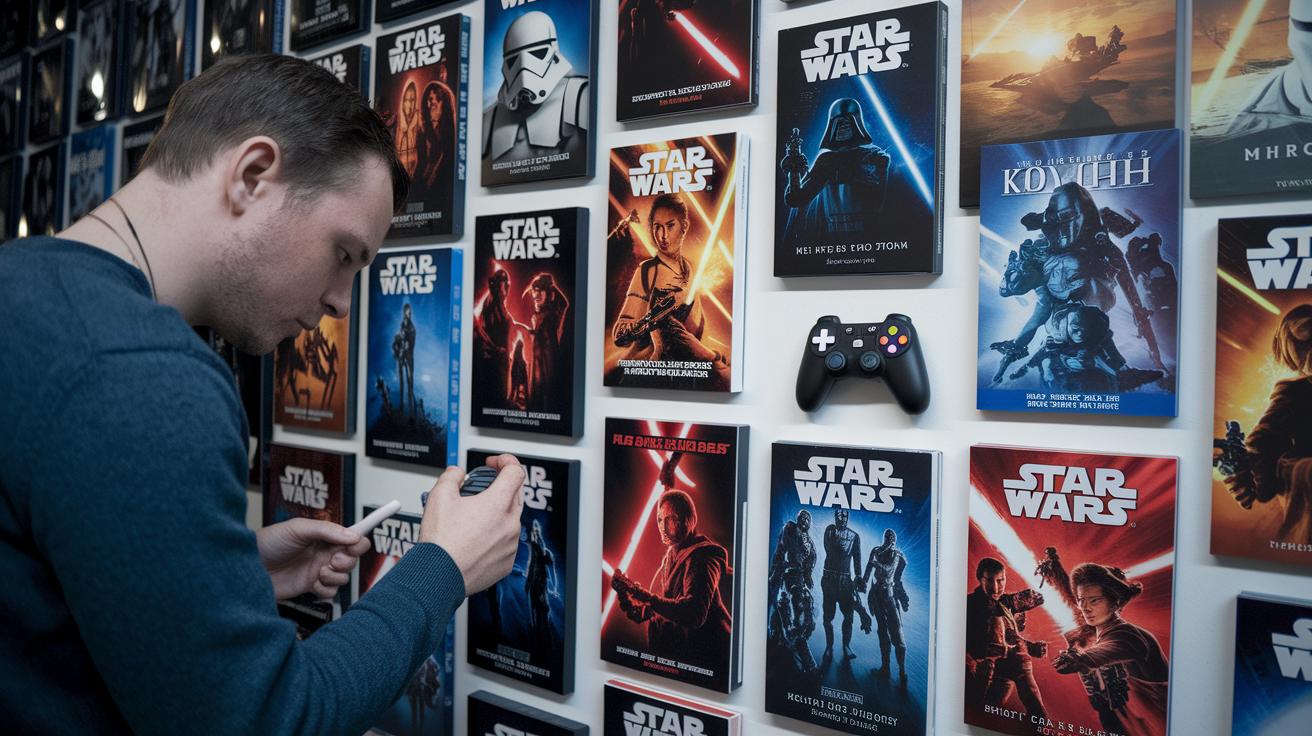
Star Wars is a great example of a story that spreads its magic across lots of different media. The films, made from 1977 to 2019, laid down the core of the saga, drawing us into a universe packed with heroes, villains, and unforgettable battles. Ever get chills when you see that classic opening crawl that teleports you to a galaxy far, far away?
Then there’s the animated series, like The Clone Wars, which fills in the gaps and offers fresh perspectives on the epic events. It shows side stories happening right alongside the big cinematic moments. Meanwhile, comics let us dive deeper into characters through neat spin-offs, and video games such as Knights of the Old Republic (2003) let you be more than a spectator, you get to live out daring choices as your own hero.
All these different channels are tied together with a World Bible that spans over 100 projects, ensuring everything sticks true to the beloved lore. And with interactive campaigns like Force Friday, fans are invited to jump in, hunt for clues, and become active parts of this vibrant universe.
| Media Type | Example Title | Years | Narrative Role |
|---|---|---|---|
| Film | Original Trilogy | 1977–1983 | Main saga arc |
| Animated Series | The Clone Wars | 2008–2020 | Backstory and context |
| Comics | Star Wars (Marvel) | 2015–present | Character-focused spin-offs |
| Video Games | Knights of the Old Republic | 2003 | Interactive exploration |
Henry Jenkins’ Transmedia Storytelling Example Foundations

Henry Jenkins put transmedia storytelling on the map back in the early 2000s when he was at MIT. He showed us how movies, comics, games, and digital media each add their own splash of color to a bigger story. Instead of recycling the same old content, every medium gives you a fresh view. Fun fact: Jenkins revealed that a simple comic could peel back hidden layers of a movie, giving fans a totally new way to dive into an epic tale.
His idea is built on three simple ideas: worldbuilding, seriality, and subjectivity. Worldbuilding means you create a setting so detailed that every little part feels important. Seriality is like enjoying episodes in a favorite series, with the story unfolding bit by bit. And subjectivity lets different media tap into various moods and feelings, which makes the whole story even richer.
Jenkins’ method shows that when everyone, from movie makers to game designers, follows clear storytelling rules, they can work on their own parts and still weave together one big, immersive story. This approach has sparked tons of projects, proving that when each medium brings its own story twist, the whole experience gets way more engaging and full of surprises.
Transmedia Storytelling Example: Step-by-Step Campaign Framework

Imagine your transmedia campaign starting with a solid guide, a World Bible. This guide is packed with your universe's lore, character backstories, and all the rules that make your story tick. It holds everything together, even when different channels share their own unique takes.
Next, give each media channel its own special role. Use films to show the main story, social media for quick, fun snippets that spark conversation, and games for puzzles that let your audience jump right in. With clear steps and a handy campaign design workflow, every creative team knows exactly what to do.
- World Bible: Capture your lore, character histories, and the rules that drive your universe
- Film: Show the main story and key plot points
- Social Media: Share short stories and moments that get people talking
- Games: Offer interactive challenges that pull the audience into the action
Keep an eye on things like social buzz, game completions, and shares. These numbers tell you what’s working and help guide your next creative moves. Each team brings its own flavor to the mix, building a story that truly resonates across every platform.
Transmedia Storytelling Example: Emerging Trends and Innovations

Imagine walking into a theme park where every corner bursts with hidden stories. Picture digital layers hovering around you, much like the augmented reality effects seen at Avengers Campus AR back in 2019. Each time you scan a surface, a small piece of a much larger tale unfolds right before your eyes, blending the buzz of real sights and sounds with digital surprises.
Now, think about virtual worlds where you can build your own adventure. Metaverse platforms let you explore stories that aren’t set in stone. Instead, you can twist and turn the narrative on your own terms, making the experience as flexible and open as your own imagination.
Then there’s the magic of short-form social media. Apps like TikTok and Instagram pack mini-stories into quick clips that keep you hooked, one exciting snippet after another. It’s like a choose-your-own-adventure where each tap or swipe leads you down a new, unexpected path. And thanks to smart, data-driven personalization, every view feels just right for you.
And what about those live, in-the-moment experiences? Real-time extensions like live streams and narrative podcasts let you dive into a story as it happens. You feel that electric buzz of immediacy, like being right there at the start of a show. For more on how these immersive platforms are changing the game, check out the article "digital storytelling explained for creatives" here: https://vasthysfriends.com?p=836.
- Augmented reality: Enhances physical settings with digital elements
- Metaverse: Empowers users to shape and expand narratives freely
- Social media: Delivers quick, engaging micro-stories in bite-sized clips
- Real-time: Brings live, interactive storytelling that unfolds right before your eyes
Final Words
In the action, we watched film, animation, and interactive channels add unique layers to a story that stretches across screens. The Matrix Universe shines as a transmedia storytelling example that mixes main plot lines with side stories and interactive puzzles. Each medium adds a fresh spark that pulls viewers deeper into the mix of digital experiences. This approach leaves us feeling eager to see more creative twists and celebrate the magic of shared, inventive entertainment.
FAQ
What is transmedia storytelling?
Transmedia storytelling signifies a narrative that unfolds across various platforms, where each medium contributes its unique piece, enhancing overall engagement through films, comics, games, and more.
What does Henry Jenkins say about transmedia storytelling?
Henry Jenkins explains transmedia storytelling as a method where each media form offers distinct narrative insights instead of reusing content. His work, often available in PDF formats, breaks down these ideas clearly.
What are some examples of transmedia storytelling?
Examples include franchises like The Matrix and Star Wars that extend their narratives through films, animated shorts, comics, games, and novels to create a rich, interactive story universe.
How do transmedia games contribute to storytelling?
Transmedia games inject an interactive layer into narratives, allowing audiences to engage with and influence story elements beyond traditional media, deepening their connection with the overall story.
What is a transmedia company?
A transmedia company manages content across multiple media platforms, ensuring each element delivers a distinct yet cohesive narrative that draws audiences into an engaging brand experience.
How is transmedia storytelling used in marketing?
Transmedia storytelling in marketing builds a unified brand experience by weaving narrative threads across channels like social media, commercials, and events, engaging customers with interactive, platform-specific content.
How does Coca-Cola use transmedia storytelling?
Coca-Cola crafts its brand story across commercials, digital campaigns, social channels, and live events, with each medium offering different narrative snippets that work together to create a unified brand experience.
What are the 4 P’s of transmedia storytelling?
The 4 P’s typically refer to platform, plot, participation, and performance, each playing a key role in crafting a balanced and engaging multi-platform narrative for audiences.
What are the 7 core concepts of transmedia storytelling?
The 7 core concepts include worldbuilding, seriality, multiple entry points, narrative growth, unique medium contributions, audience participation, and interactive storytelling, all crucial for a dynamic narrative.